
Ready to save hours every week? Choose the option that fits where you are right now:
Senior Pastor AI Prompt Pack
190 ready-to-use prompts covering sermon prep, pastoral care, staff management, and congregant follow-up. Copy, paste, and get results in minutes.
Full Ministry Automation
8 pre-built AI agents that run automatically — sermon prep, visitor follow-up, social media, giving analysis, and more. Everything in one subscription.
Why Sermon Illustrations Actually Matter
Sermon illustrations increase message retention by up to 65% compared to abstract teaching alone, according to communication research from the University of Tennessee. Charles Spurgeon called illustrations "windows that let the light in," and modern neuroscience confirms he was right.
The human brain processes stories differently than facts. When you share a statistic, the language processing centers activate. When you tell a story, the motor cortex, sensory cortex, and frontal cortex all light up. Your congregation literally experiences the illustration alongside you.
Two ways to save hours every week:
Senior Pastor AI Prompt Pack
$6.99 · one-time
8 AI Agents for Ministry
$97/mo · or $997/year
Here's the practical reality. Most people forget 90% of your sermon within 72 hours. But they remember the stories. They remember the illustrations. They remember the moment you made an abstract truth concrete.
"A good illustration builds a bridge between biblical times and modern times."
Think about the sermons you remember from your own life. Chances are, you remember an illustration. Maybe it was a visual demonstration. Maybe it was a personal story. Maybe it was a historical example that made everything click.
That's the power of a well-placed illustration. It transforms information into transformation.
The Attention Problem Every Pastor Faces
TED Talks average 18 minutes for a reason. Research shows adult attention spans max out around 20 minutes for sustained focus. The average Protestant sermon runs 25-39 minutes according to Pew Research.
You're fighting an uphill battle every Sunday.
Illustrations give your congregation mental breaks. They shift gears from heavy exegesis to relatable content. They re-engage wandering minds. They're not optional extras. They're essential tools for effective communication.
The 7 Best Sermon Illustration Finder Tools
The best sermon illustration finder for most pastors is a combination of a dedicated database like IllustrationIdeas.Bible for daily fresh content, plus sermon preparation software like Sermonary that integrates illustrations directly into your writing workflow. This combination costs under $30/month and saves 3-5 hours weekly.
Here are the top 7 tools ranked by usefulness and value:
1. IllustrationIdeas.Bible
This free resource posts a new curated sermon illustration every day. You can search by keyword or Book of the Bible. The interface is clean and modern, unlike those 1990s-era illustration sites that look like they were built on GeoCities.
2. Sermonary Premium
Sermonary includes an illustration widget built directly into the sermon editor. Search their database, find what you need, click to add it to your sermon. No copy-pasting from external sites.
3. Ministry Pass Sermon Guides
Each weekly guide includes 2-3 curated illustrations that connect to the passage. These aren't generic stories. They're specifically selected to illuminate that week's text.
4. Preaching Today (Christianity Today)
One of the largest illustration databases available, with thousands of searchable stories, quotes, and examples. The editorial team vets content for accuracy and relevance.
5. Logos Bible Software
Logos includes illustration databases as part of larger study packages. The integration with commentaries and cross-references makes it powerful for research-heavy prep.
6. ChatGPT/Claude AI
AI tools can generate custom illustrations based on your specific passage and congregation context. They won't replace curated databases, but they can spark ideas when you're stuck.
7. Your Own Database (Google Sheets/Notion)
The most valuable illustration database is the one you build yourself. More on this system below.
| Tool | Price | Best Feature | Learning Curve |
|---|---|---|---|
| IllustrationIdeas.Bible | Free | Daily fresh content | Low |
| Sermonary Premium | $15-25/mo | Integrated workflow | Low |
| Ministry Pass | $20-40/mo | Passage-matched content | Low |
| Preaching Today | $10-15/mo | Massive database | Medium |
| Logos Bible Software | $100-500+ | Research integration | High |
| AI Tools (ChatGPT/Claude) | Free-$20/mo | Custom generation | Medium |
| Personal Database | Free | Fully customized | Medium |

Want AI Agents Specifically Designed for Pastors?
Ministry Automation offers 8 pre-built AI agents that handle sermon prep, visitor follow-up, social media, and more—so you can focus on shepherding your people.
See All 8 AI Agents →How to Build Your Own Illustration System
The most effective sermon illustration system combines external databases with a personal collection you build over time, organized by keywords and searchable in seconds. This hybrid approach ensures you always have fresh content while building a library that reflects your unique voice and congregation.

Step 1: Choose Your Storage Tool
You need something searchable. Options include:
- Google Sheets (free, simple)
- Notion (free tier available, more flexible)
- Evernote (good for clipping web content)
- Sermonary's idea notes (if you're already using it)
The tool matters less than consistency. Pick one and stick with it.
Step 2: Create Your Structure
Every illustration entry needs:
- The illustration itself (full text or summary)
- Source (book, article, personal experience)
- Keywords/topics (3-5 searchable terms)
- Scripture connections (if applicable)
- Date added (helps track freshness)
Step 3: Feed It Constantly
This is where most pastors fail. They create a system, use it for two weeks, then abandon it.
The fix? Make illustration capture a habit, not a project.
When you read something interesting, add it immediately. When something happens in your life, write it down that day. When you hear a great story, capture it before you forget.
Set a weekly reminder: "Add 3 illustrations to database." That's 156 illustrations per year. After three years, you have nearly 500 searchable illustrations.
Step 4: Use Keywords Ruthlessly
Keywords make or break your system. When you add an illustration about a marathon teaching perseverance, tag it with:
- Perseverance
- Endurance
- Running
- Discipline
- Long-term commitment
Why so many? Because you won't remember which word you used when you search six months from now. Multiple keywords = multiple ways to find it.
Types of Illustrations That Actually Work
The most effective sermon illustrations fall into five categories: personal stories, historical examples, current events, scientific facts, and everyday analogies. Each type serves a different purpose and connects with different learning styles in your congregation.

1. Personal Stories
Stories from your own life create instant connection. Your congregation knows you. They trust you. When you share a personal failure, struggle, or victory, they lean in. These illustrations are powerful because they're authentic and unrepeatable.
2. Historical Examples
Historical illustrations give weight and perspective. The story of Corrie ten Boom hiding Jews during the Holocaust illustrates forgiveness. The construction of the transcontinental railroad demonstrates perseverance. History provides tested examples of timeless truths.
3. Current Events
Recent news connects biblical truth to the world your congregation lives in today. A story from this week's headlines shows that Scripture speaks to our current moment. Just be careful: current events age quickly and can be divisive.
4. Scientific Facts
Science illustrations work well for analytical thinkers. The complexity of DNA demonstrates intelligent design. The way neurons form connections illustrates spiritual formation. Scientific facts add credibility and appeal to logical minds.
5. Everyday Analogies
Analogies from daily life make abstract concepts concrete. Faith is like a muscle that grows with use. Sin is like a credit card—easy now, painful later. The best analogies use experiences everyone shares.
Common Illustration Mistakes to Avoid
Even good illustrations can fall flat when poorly executed. The five most common mistakes are: illustrations that run too long, references that are too obscure, using too many illustrations, forcing illustrations that don't fit naturally, and relying on outdated cultural references.

Mistake #1: Too Long
If your illustration takes longer than your point, you've lost the plot. A good rule: illustrations should be 1-3 minutes maximum. Any longer and they become the sermon instead of serving the sermon.
Mistake #2: Too Obscure
Referencing a 17th-century Dutch theologian might impress seminary professors, but it confuses your congregation. If you have to explain the illustration before you can use it, find a different illustration.
Mistake #3: Too Many
More illustrations don't make a better sermon. They make a scattered sermon. If every point has three illustrations, your congregation will remember the stories but forget the Scripture. Use illustrations strategically, not constantly.
Mistake #4: Too Forced
When you shoehorn an illustration into a sermon because it's a great story (even though it doesn't quite fit), your congregation feels it. Forced illustrations create awkward transitions and weaken your credibility.
Mistake #5: Too Outdated
Cultural references from 1985 don't land with people born in 2000. If your illustration requires explaining who someone is or what something was, it's probably too old. Update your illustration library regularly.
How Many Illustrations Per Sermon
Most effective sermons use 2-4 substantial illustrations. One major illustration per main point is a good rule of thumb. More than 5 illustrations in a 30-minute sermon risks overwhelming your message.
The goal is illumination, not entertainment.
Think of illustrations like salt in cooking. The right amount enhances the flavor. Too much ruins the dish. Your sermon's main ingredient is Scripture. Illustrations season it, they don't replace it.

Ready to Save 10+ Hours Per Week?
Ministry Automation's AI agents are specifically designed for pastors—handling sermon prep, visitor follow-up, social media, and administrative tasks so you can focus on what matters most.
Get Started TodayAbout the Author

Jake Thornhill
Jake Thornhill is a pastor, church planter, and founder of MinistryAutomation.com. With 15+ years in ministry and an M.Div. from Fuller Theological Seminary, Jake helps pastors leverage AI to reclaim time for what matters most.
Related Articles
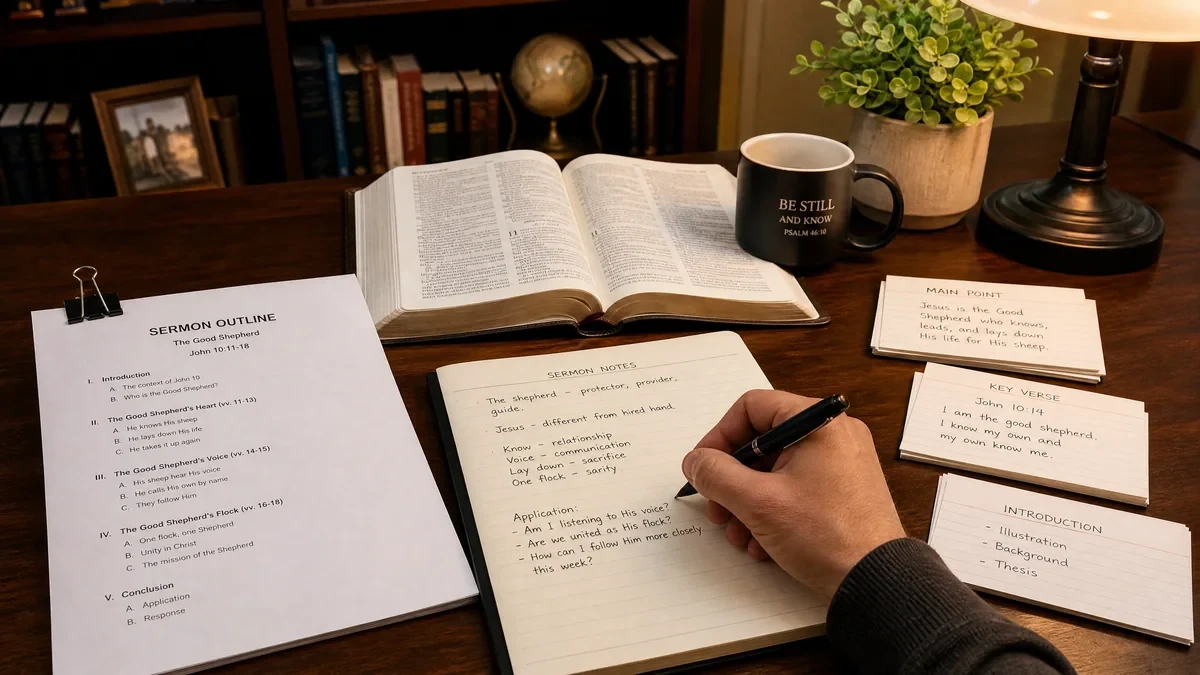
Sermon Outline Template: 5 Structures Every Pastor Should Know
Stop starting from a blank page every week. These 5 proven sermon outline templates — with fill-in-the-blank frameworks and real examples — will cut your prep time and sharpen your preaching.
7 Best AI Sermon Prep Tools That Actually Save Time (2026 Review)
Discover the top AI-powered sermon preparation tools that can cut your prep time in half while maintaining theological depth and personal authenticity.
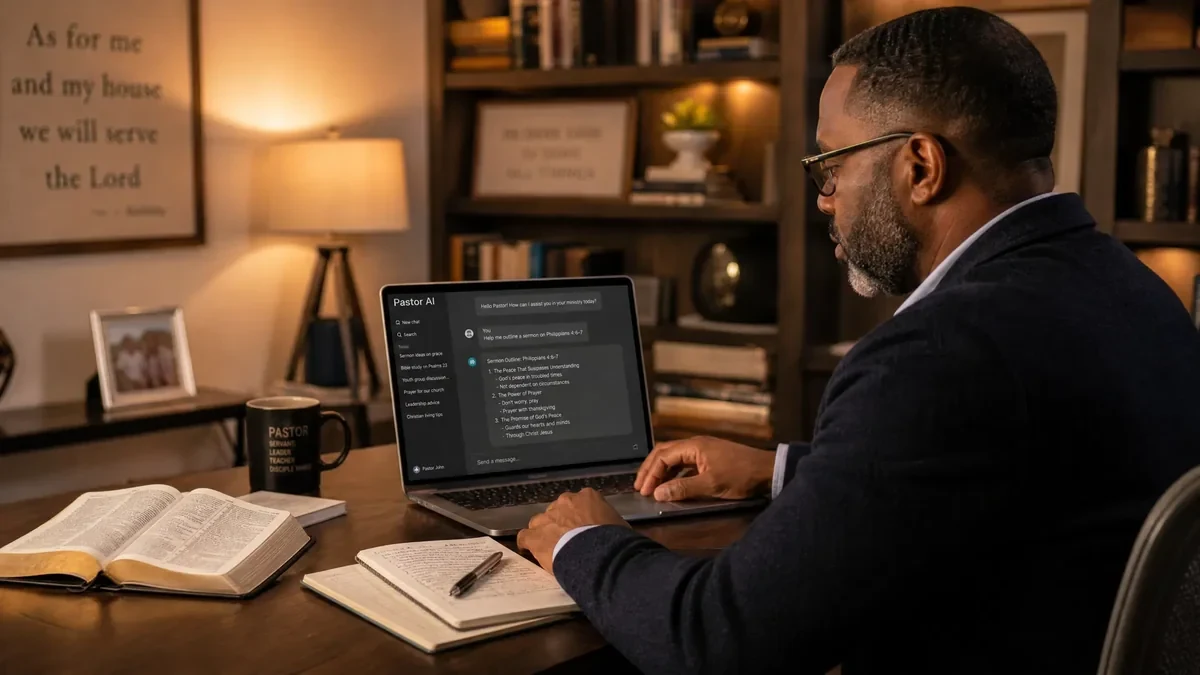
Best ChatGPT Prompts for Pastors: 50+ Copy-Paste Examples That Actually Work
Stop guessing how to use AI in ministry. These 50+ tested ChatGPT prompts cover sermon prep, visitor follow-up, social media, announcements, and more — copy and paste them today.